As a jewelry store owner, you do everything you can to maximize your sales: you run targeted ads, train your staff to be experts, curate stunning collections and even host engaging events. But if you’re not optimizing your jewelry store layout, you’re not doing everything you can to reach your full potential. The way a customer moves through your space influences their mood, their comfort level and ultimately, their willingness to buy. Read on to learn how the layout and design of your jewelry store interior can directly impact your success and help you start a jewelry store business that thrives.
Why your jewelry store layout is your strongest sales tool
Think of your jewelry store layout as the silent salesperson that never takes a day off. It’s not just a space to place counters. It can have a big impact on your customers’ psychology and their path to purchase. From the lighting that hits your dazzling jewelry just right to the comfortable seating that encourages a long-form engagement ring consultation, every component can either strengthen or weaken your sales game.
When your jewelry shop design is intentional, it guides the customer’s journey, reduces friction and highlights your high-margin pieces without making the shopper feel pressured. You should strive to create an atmosphere where the luxury of the product is matched by the ease of the experience.
Different types of jewelry store layout designs
The right jewelry store layout plan for you will depend on your specific space, the type of inventory you carry and the brand identity you want to project. While there isn't a one-size-fits-all solution, most successful retailers lean on a few proven frameworks.
Freeflow
The freeflow layout is exactly what it sounds like: a flexible, open arrangement that encourages wandering and discovery. Instead of following a set path, customers move between independent islands of display cases. This is a favorite for high-end boutiques because it feels less like a retail store and more like an art gallery, allowing for a relaxed, self-guided exploration of your jewelry collections.
Loop
Commonly known as the racetrack layout, the loop design creates a defined path that leads customers from the entrance, around the entire perimeter of the store, and back to the front. This is one of the best jewelry store layout options for maximizing exposure, as it ensures that every customer sees every case. The loop layout is particularly effective for jewelry stores with a wide variety of price points or categories.
Grid pattern
The grid pattern utilizes parallel aisles and is often used in stores that prioritize efficiency and high-volume traffic. While it might sound a bit “big box” for a luxury setting, it can be incredibly effective for silver-heavy or gift-oriented shops where customers want to browse organized categories quickly. It provides a sense of order and makes it very easy for staff to maintain lines of sight across the floor.
Why interior design for jewelry stores matters
Interiors are, of course, important for housing the actual product for sale. But a well-designed interior can also become a sensory experience that may help buyers justify a luxury price tag. To provide an exceptional customer experience, you need to consider everything from the temperature of your lighting to the ergonomics of your furniture.
Store lighting
This is arguably the most critical element of interior design for jewelry stores. You need a mix of ambient lighting for mood and high-intensity sparkle lighting inside cases to make diamonds and gemstones pop.
Display cases
Your cases should be at a height that encourages leaning in without causing strain. Use a mix of eye-level wall cases and waist-high islands to create visual depth and keep the customer’s eye moving.
Consultation spaces
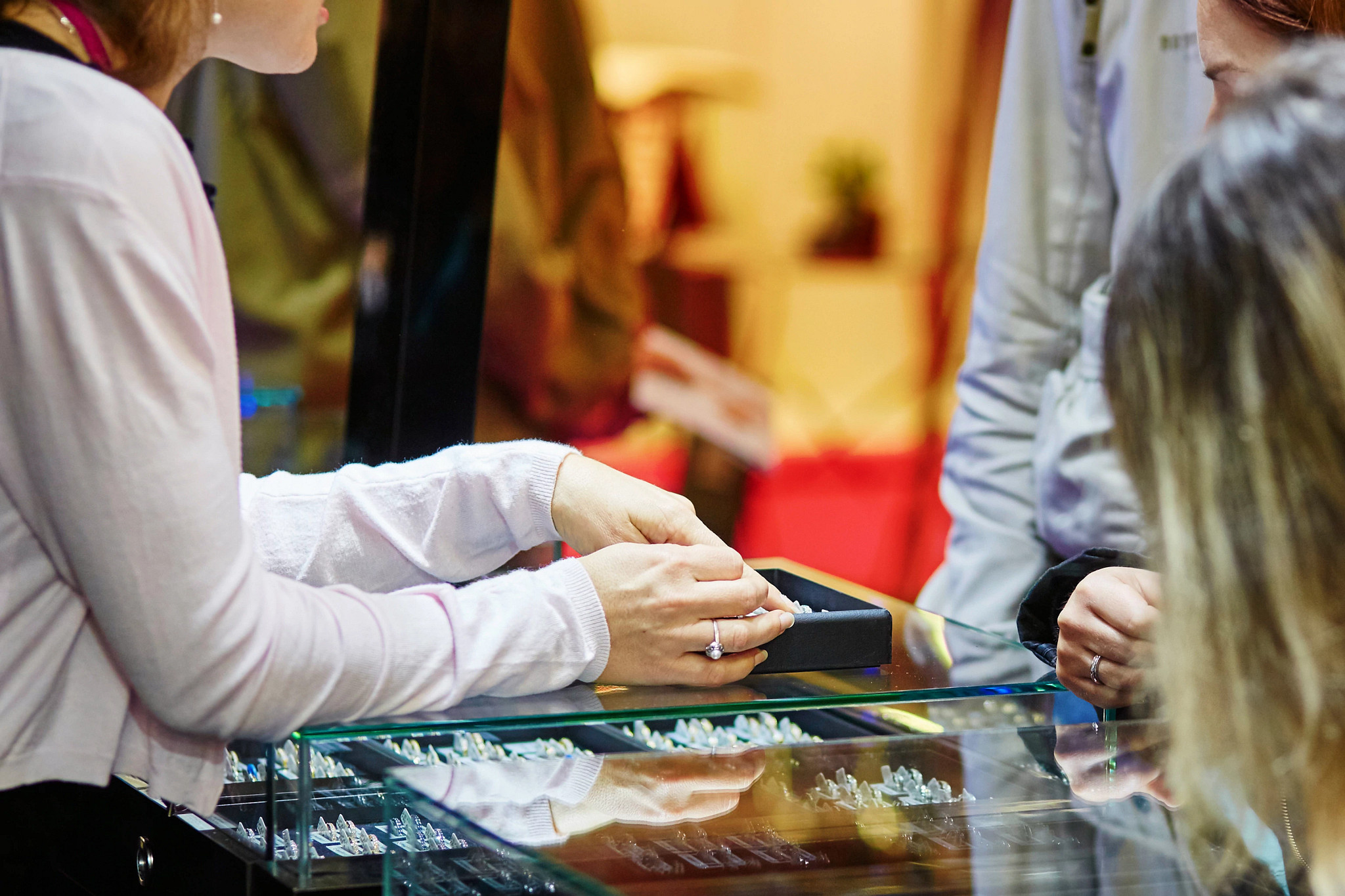
High-ticket jewelry sales often happen while sitting down. Dedicated consultation areas with comfortable seating and privacy help customers feel secure and relaxed as they make big financial decisions.
Front entryway
Also known as the decompression zone, the first few feet of your store should be open and inviting. Avoid placing large displays right at the door so customers can adjust to the atmosphere before they start shopping.
Furnishing details
Every texture matters. Whether it’s plush velvet stools or sleek marble countertops, your furniture should reflect your brand’s price point and make the customer feel like they are somewhere special.
Integrating security without sacrificing style for your jewelry shop
Security is your top priority, but your store shouldn't feel like a fortress. Modern jewelry shop design should allow for the seamless integration of high-end security features that actually enhance the aesthetic. Think about using shatter-resistant glass that remains crystal clear, or discreetly placed cameras that blend into architectural molding. By layering your security, such as utilizing smart case locks and strategic line-of-sight planning, you can keep your inventory safe while maintaining an open, airy and welcoming environment for your guests.
Jewelry store layout checklist
If you’re gearing up to optimize your jewelry store layout design for sales success, add these three categories to your checklist to ensure you don't miss the forest for the trees.
Pre-design planning questions
Before moving a single case, ask yourself: Who is my target customer and how do they shop? Are they grab-and-go gift buyers or sit-and-stay bridal clients? You also need to audit your inventory: how much of your floor space should be dedicated to your best-sellers versus your unique, one-of-a-kind statement pieces?
Key elements to review
Traffic flow. Is there a natural right-turn bias in your store? (Most customers naturally turn right upon entering).
Point of Sale (POS) location. Is your checkout tucked away to allow for privacy, or is it a central hub that helps manage the floor?
The Power Wall. Which wall is most visible from the entrance? This is your prime real estate for your most impactful items.
Common mistakes to avoid
One of the biggest mistakes is overcrowding the floor. If customers feel like they might bump into something, they won't relax. Another pitfall is poor lighting. If the jewelry looks better under a smartphone flashlight than your store lights, you may be losing sales. Lastly, don't forget to leave adequate space between your aisles. If aisles are too narrow and customers are bumped by others while browsing (known as the “butt brush” effect (butt brush effect)), they may be annoyed with the experience and leave your store.
Protect your jewelry business with Jewelers Mutual
Designing a jewelry store layout that maximizes sales is a smart move. So is protecting your business. Jewelers Mutual offers customized solutions that can help drive your business’ growth and success—no matter the size. From our streamlined JM Shipping Solution to on-site security assessments and revenue-driving programs, we have products that support every facet of your business.
This content is for educational purposes only and does not constitute financial, tax, or professional advice.