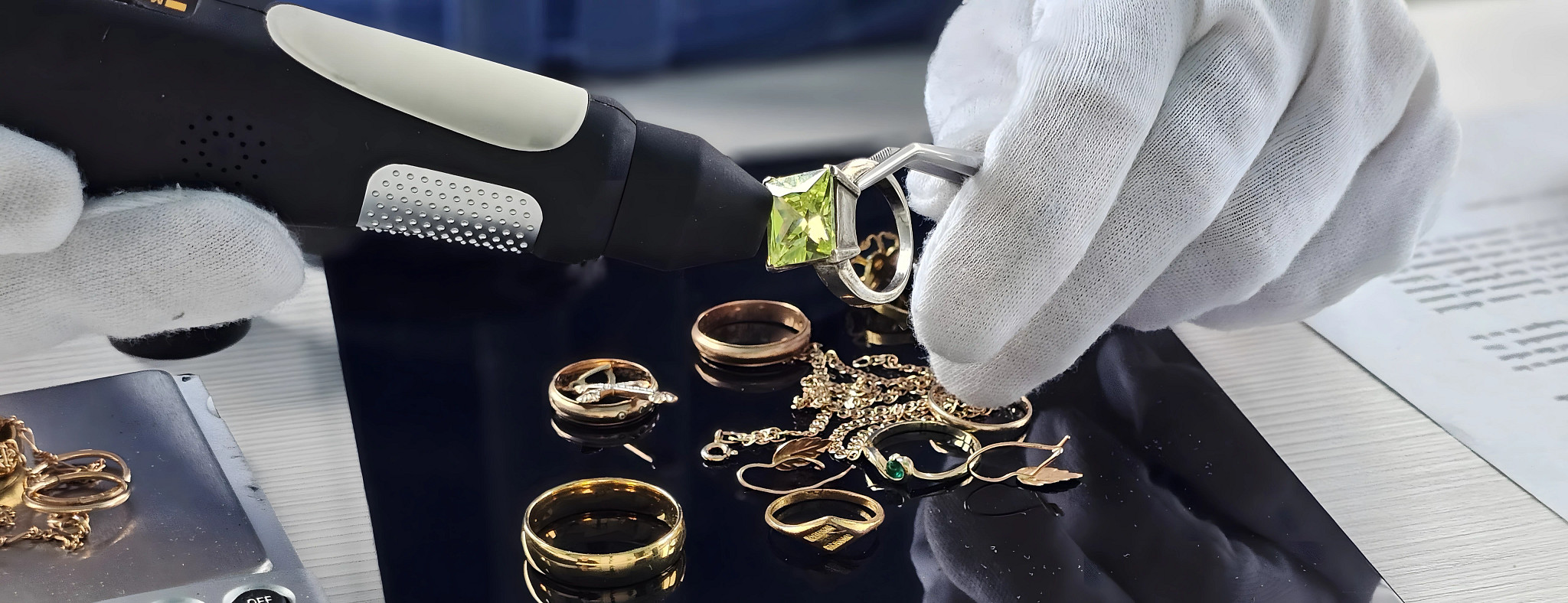
If you're a jewelry business owner who is looking for ways to help automate inventory counts, reduce theft and increase efficiency for high-value items, then a Radio Frequency Identification (RFID) jewelry tracking system might be just what you need. Traditional methods of counting stock can be quite time-consuming, often leaving room for human error that eats into your margins. By shifting to radio frequency technology, you can get a bird's-eye view of your whole showroom in a matter of seconds, rather than hours. Such an upgrade can help modernize your workflow so you can spend less time behind a clipboard and more time with your customers. Read on to see how this tech is reshaping the way jewelry store owners handle their most precious assets.
What is an RFID jewelry tracking system?
RFID jewelry tracking systems combine specialized software, hardware and smart tags that use radio waves to identify and track inventory items automatically. Unlike a standard tag that must be physically read by a lens, an RFID tag communicates wirelessly with a reader, allowing you to scan a locked display case without ever opening the door. You simply wave a handheld scanner near your trays, and the system instantly checks off every item against your digital records. It's a seamless way to keep your books balanced without the friction of manual data entry or individual item handling.
Key differences between barcode and RFID inventory systems
The main divide between barcodes and RFID comes down to line of sight. With a barcode system, you have to find the physical label and aim a laser directly at it, which means touching every single piece of jewelry in your vault. With RFID, the reader can communicate with multiple tags simultaneously from several feet away.
Inside the jewelry industry, barcodes are often used for static tracking, while RFID is for active management. Remember that while RFID is lightning-fast, radio waves can sometimes struggle with heavy metal or foil. So, if you are tagging bulky silver pieces or using metallic gift boxes, make sure your RFID jewelry tags are strategically placed to avoid interference. RFID also allows for bulk scanning, meaning you can scan an entire delivery box before you even unpack it, something that is simply impossible with traditional barcodes.
Why is RFID helpful for jewelry businesses?
So why should jewelry shop owners make the move to an RFID jewelry tracking system? It really comes down to reclaiming your time and tightening your security net. Here is a look at the specific benefits you can expect once you make the switch:
Real-time jewelry inventory tracking
A big headache in the jewelry industry is the inventory gap. This is the period between counts where you aren't 100% sure what's in the back versus what's on the floor. RFID gives you a jewelry tracking system that works in real time. You can perform a full store sweep in minutes every morning, ensuring your digital storefront and physical trays are always in perfect sync.
Better accuracy
Human error can be a silent profit killer. When you're manually scanning 500 individual barcodes, it is easy to double-count an item or miss one tucked in the corner of a tray. Because jewelry RFID tagging removes the need for manual aiming, the system catches every tag within range with near-perfect precision. This level of accuracy is important for your financial records and for maintaining the trust of your insurance providers.
Enhanced security
RFID can be a high-tech deterrent against theft. You can set up gate readers at your exits that trigger an alert if a tagged item leaves the premises without being decommissioned at the point of sale. Understanding types of jewelry store thefts and how to prevent them is a great start, but adding RFID creates a digital geofence around your inventory that acts as a 24/7 watchdog.
Quicker system
If you've ever had to stay late after a long Saturday shift just to finish an inventory count, you know how draining the manual process can be. RFID turns a potentially hours-long job into a ten-minute task. This efficiency reduces labor costs and keeps your staff fresh and focused on sales. Knowing what to do during and after a jewelry store robbery is important, but having an ultra-fast inventory system lets you identify exactly what was lost after a security event.
Data analytics
An RFID jewelry inventory system counts your inventory and collects data on which items are most often pulled from the cases. You can see which pieces your staff shows the most, even if they aren't selling yet. This data shows which styles are trending with your local clientele, helping you make solid, data-driven decisions when it's time to restock or design your next custom collection.
When should a jewelry business switch from barcodes to RFID?
When is the right time to pull the trigger on this change? Generally, you should consider making the switch when your inventory reaches a volume that requires more than an hour of your time for manual counting. If you find you're doing full counts only once a month because the process is too painful, you may leave yourself vulnerable to shrinkage you won't notice until it's too late. While the initial investment in an RFID jewelry tracking system is higher than that of a cheap barcode scanner, the time savings could pay for itself within the first year for mid-to-large-sized showrooms.
Protect your jewelry business with Jewelers Mutual
Implementing the latest technology is a great way to stay ahead, but you should always pair your tech with a solid safety net. Jewelers Mutual provides customizable jewelry business insurance designed to meet the unique needs of every business, from small independent boutiques to large-scale manufacturers. These policies can be tailored to protect your inventory, your staff and your hard work against the unexpected. Click here to learn more about how we can help you keep your business secure as you grow.
This content is for educational purposes only and does not constitute financial, tax or professional advice.