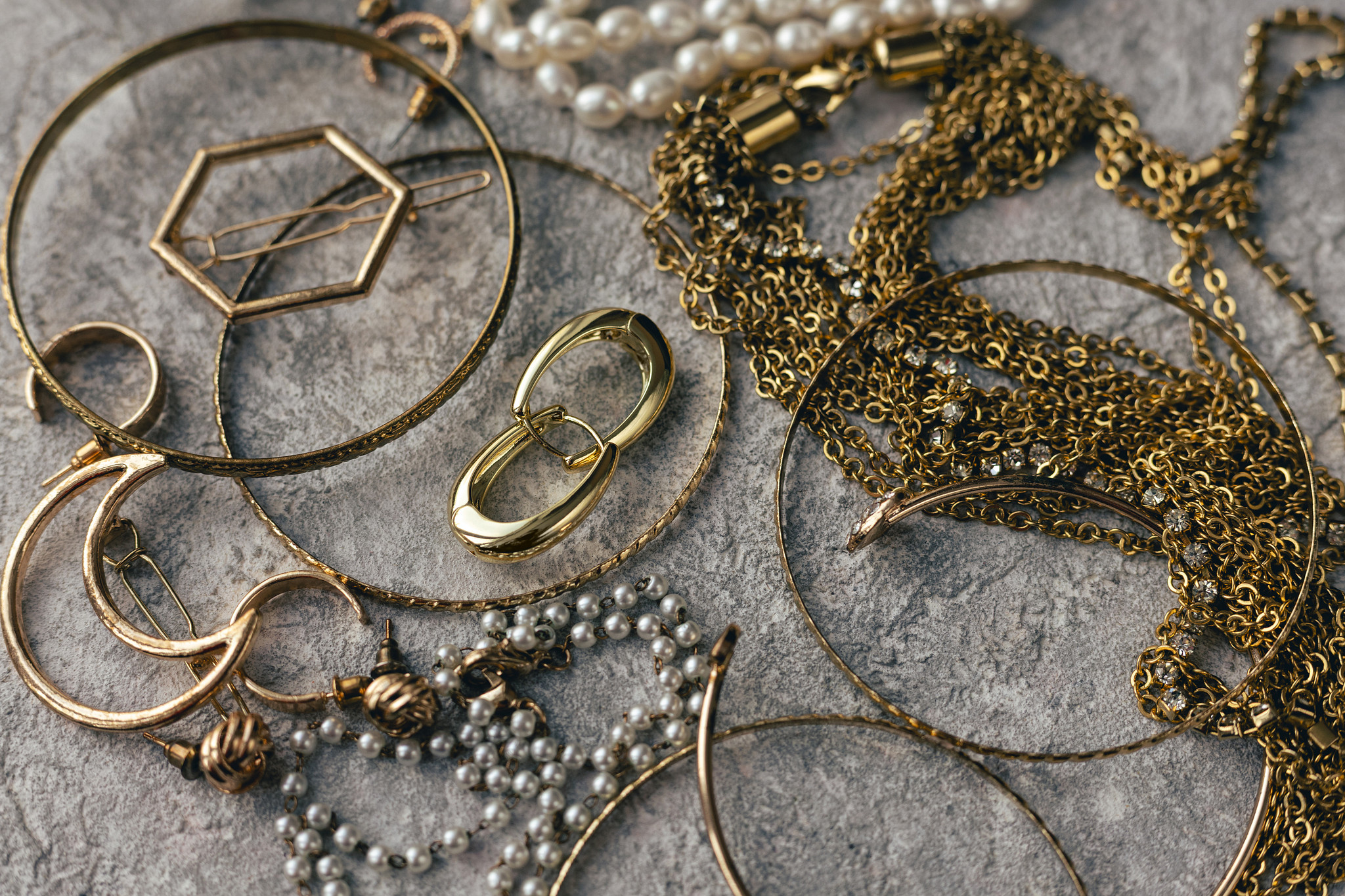
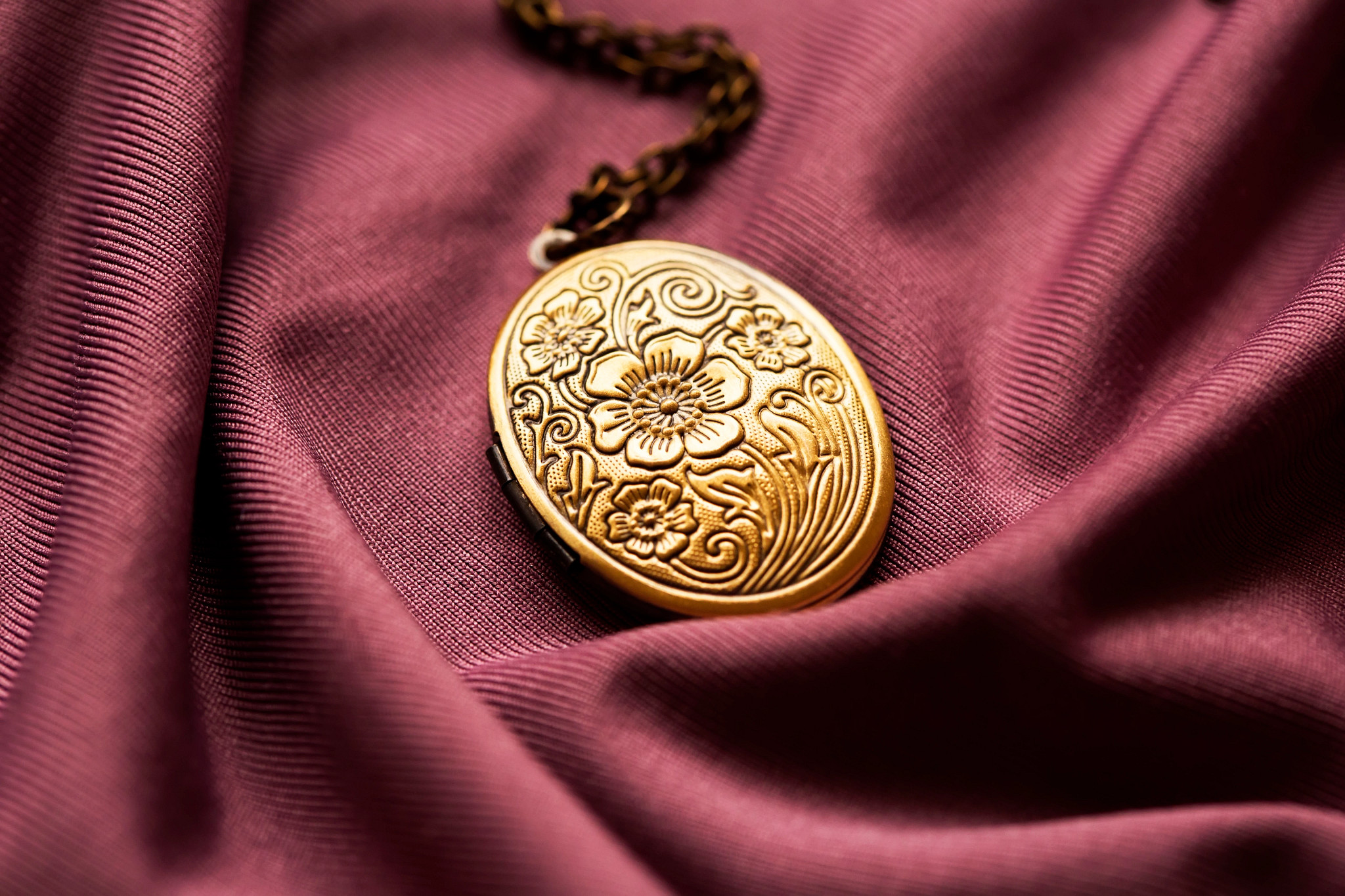
You might know it as a necklace stack, a "neckmess,” or perhaps just necklace layering. Whichever term you use, this style has been a long-loved staple of self-expression. From the bohemian necklace stacks of the 1970s and the colorful necklace layering of the 1980s to today’s more intentional and curated looks, learning the art of layering necklaces like a pro is a great way to flaunt your style.
How to layer necklaces for the perfect stack
Wearing layered necklaces is a great way to zhuzh up a look, whether you’re attending a formal event or heading out for a casual dinner. How you layer your necklaces is entirely up to you, but here are a few factors to consider when building your necklace stack.
Varying your lengths
Having all your necklaces be the same length would defeat the purpose - they’d all fall at the same place on your chest, creating a tangled mess that hides your best pieces. Varying the lengths of your necklaces allows each piece to be seen and contribute to the whole. For a classic, foolproof look, try combining three standard lengths:
- A 14-inch choker or collar necklace to frame the neck.
- A 16-inch or 18-inch princess length that hits right at the collarbone.
- A 20-inch or 24-inch matinee length to elongate the look.
Mixing chains with bolder styles
Similarly, wearing too many dainty pieces or too many bold necklaces at the same time can be an issue. If all your pieces are dainty, nothing really stands out. A sea of tiny chains and small charms becomes a blur of jewelry, lacking a "wow" factor. On the flip side, if you have too many bold pieces, the look can become crowded and chaotic. A necklace that’s meant to be a bold centerpiece doesn’t get its moment in the spotlight if it’s worn alongside three other heavy hitters.
Add a focal point with pendants and charms
Since necklace layering quickly becomes a series of intersecting chains, you want to draw the eye to a specific destination. A focal point, such as a large statement pendant or a grouping of smaller charms, gives the eye a place to land. If you’re wearing a thin gold chain, a small pearl necklace, and a lariat with a diamond cross or coin pendant, you have enough contrasting textures and weights without overdoing it.
Necklace layering tips for a cohesive look
The secret to a pro necklace stack is making sure your pieces look like they belong in the same family. This doesn’t mean they have to be identical (after all, the best families have a variety of personalities!), but they should share a common thread. If you decide to mix metals, for instance, make sure you distribute the various shades throughout the stack. Try not to just throw in one random rose gold chain among four silver necklaces. Instead, try alternating or including a two-toned piece that ties both metals together.
To keep your look from becoming chaotic, aim for pieces from the same era or aesthetic. Pairing a Victorian-style locket with a 1990s-inspired plastic choker can feel disconnected. Instead, try to keep your textures (and eras!) complementary. While you can certainly mix materials, such as a delicate gold chain with a leather cord or a string of small seed pearls, try to keep it balanced. A heavy, chunky leather cord will likely overpower a thin silk thread necklace.
Layered necklace inspiration: looks for every occasion
Necklace layering is the ultimate “choose your own adventure” jewelry style. It’s a very versatile look, working just as well for the morning school drop-off as it does for a black-tie gala. Here is how to tailor your necklasce stack to your schedule:
The minimalist daily stack
For a layered necklace look that works from your morning coffee to a casual dinner with friends, keep it light and airy. Try a 14-inch gold snake chain paired with a 16-inch dainty cable chain featuring a tiny diamond or initial charm. This duo adds just enough sparkle to a basic white tee without feeling too extra. The key to this look is simplicity and comfort - you want a stack that takes things up a notch without getting in the way of your daily errands.
The polished office-ready look
In a professional setting, you want your jewelry to look organized and sophisticated. Go for a more structured look with this necklace trio: a 16-inch herringbone chain, an 18-inch pendant necklace and a 20-inch paperclip chain. Combining a solid flat chain (like the herringbone) with a textured paperclip chain creates a sophisticated contrast that looks great over a silk blouse or a high-neck bodysuit. It’s a powerful look that nicely frames your face, whether you’re in the office or simply looking fabulous for virtual meetings.
The bold statement for a night out
When the sun goes down, feel free to dial up the drama a bit. This is the perfect time to experiment with different textures and visually heavier pieces. Try a chunky curb chain as your base, layered with a long lariat necklace, especially if you’re wearing a V-cut neckline. Top it off with a bold colored gemstone pendant. Mixing contrasting textures, like a high-shine polished gold paired with a rugged, hammered metal or vintage oxidized finish, creates a high-fashion look that is sure to bring some attention your way. Just remember to check your necklaces in a mirror to make sure they aren't tangled before you head out the door!
Common necklace layering mistakes (and how to avoid them)
Even for the most seasoned jewelry wearers, there’s going to be some trial and error. But that’s part of the fun - this is how you discover your signature look! However, to save you a few tangled-up mornings and fashion faux pas, let’s look at a few common necklace layering mistakes so you can learn from the “oops” of others.
Mistake #1: too many statement pieces
While this was touched on earlier, it bears repeating: if every necklace is shouting, the ensemble is just loud. A statement piece, whether it’s a chunky gemstone, a large medallion or a thick heavy chain, needs some space to breathe. When you pile on three or four bold pieces, they compete for space and attention. Try to pick one hero piece and let the other necklaces act as the supporting cast.
Mistake #2: ignoring the gaps between chains
Spacing is the factor that can really make or break a necklace layering effort. You don't want your necklaces so close that they overlap and look like one thick, messy cord. But you also don't want a giant gap. For example, pairing a tight 12-inch choker with a single 30-inch “Downton Abbey” style opera chain leaves a massive, awkward gap on your chest. Aim for roughly one to two inches of space between each layer to create a cohesive waterfall effect.
Mistake #3: forgetting your outfit's context
“Outfit context” means considering the neckline, fabric, and the specific occasion of what you’re wearing to make sure your jewelry works with, not against, it. For instance, a complex layered necklace stack can easily get lost or look cluttered against a busy floral print or a ruffled collar that already provides plenty of visual noise. You should also consider the physical relationship between materials: delicate gold chains are beautiful, but they can easily snag on chunky knit sweaters or get tangled in lace.
If you decide on a specific jewelry look before you’ve even picked out your clothes, it might be apparent. A heavy, edgy metal stack might feel out of place when paired with a soft, ethereal sundress (though if that’s your style, wear it proudly!). Or a colorful, plastic bakelite stack may be too playful for a formal event. In short, your jewelry and clothes should tell the same story and work toward the same aesthetic goal.
Protect your necklaces with Jewelers Mutual
Once you’ve curated the perfect necklace stack, the last thing you want to worry about is a snapped chain or a lost pendant. Consider insuring your valuable jewelry pieces with a personal jewelry insurance policy from Jewelers Mutual. This comprehensive coverage protects against loss, theft, damage and disappearance. Click the link below to check your rate today.