When you think of Victorian jewelry, you may envision ornate lockets, intricate gold detailing and dramatic silhouettes. Yet Victorian jewelry isn’t defined by just one look. Instead, it reflects decades of artistic, cultural and technological changes spanning more than 60 years. From delicate, sentimental designs to bold, architectural statement pieces, antique Victorian jewelry delivers unmistakable character. Read on to discover the origin of Victorian jewelry, explore its key eras and learn how Victorian-era jewelry continues to influence modern trends.
Why is it called "victorian jewelry"?
Victorian jewelry is named for Queen Victoria, who reigned over Britain from 1837 to 1901. Dramatic cultural, industrial and artistic changes marked this period. Much like Georgian or Edwardian jewelry, the Victorian era takes its name from the monarch whose reign shaped its style and values.
Jewelry trends during the Victorian age were heavily influenced by royal fashion, with Queen Victoria’s personal tastes often setting the standard across Europe and America. As a result, jewelry created during this time and styles inspired by it today are collectively known as Victorian-era jewelry, reflecting the historical period and its design evolution.
The key eras of victorian jewelry
While Victorian-era jewelry is often grouped under a single label, it actually evolved through three distinct design periods. Each phase reflects changing cultural influences, artistic movements and technological advances that shaped how jewelry was made and worn. Let’s take a look at each of the three periods and what makes them distinct.
The romantic period
The beginning of Queen Victoria’s reign is referred to as the Romantic Period and emphasized emotion, nature and symbolism in jewelry design. Pieces from this era often featured floral designs, hearts, bows and snakes, typically crafted in warm yellow gold. Victorian-era necklaces were usually lightweight and detailed, sometimes accented with seed pearls (tiny, natural pearls with a delicate shimmer) or colorful gemstones like garnet and turquoise. Hand engraving and repoussé, a technique where metal is shaped from the back to create raised designs, gave jewelry a soft, organic look.
The grand period
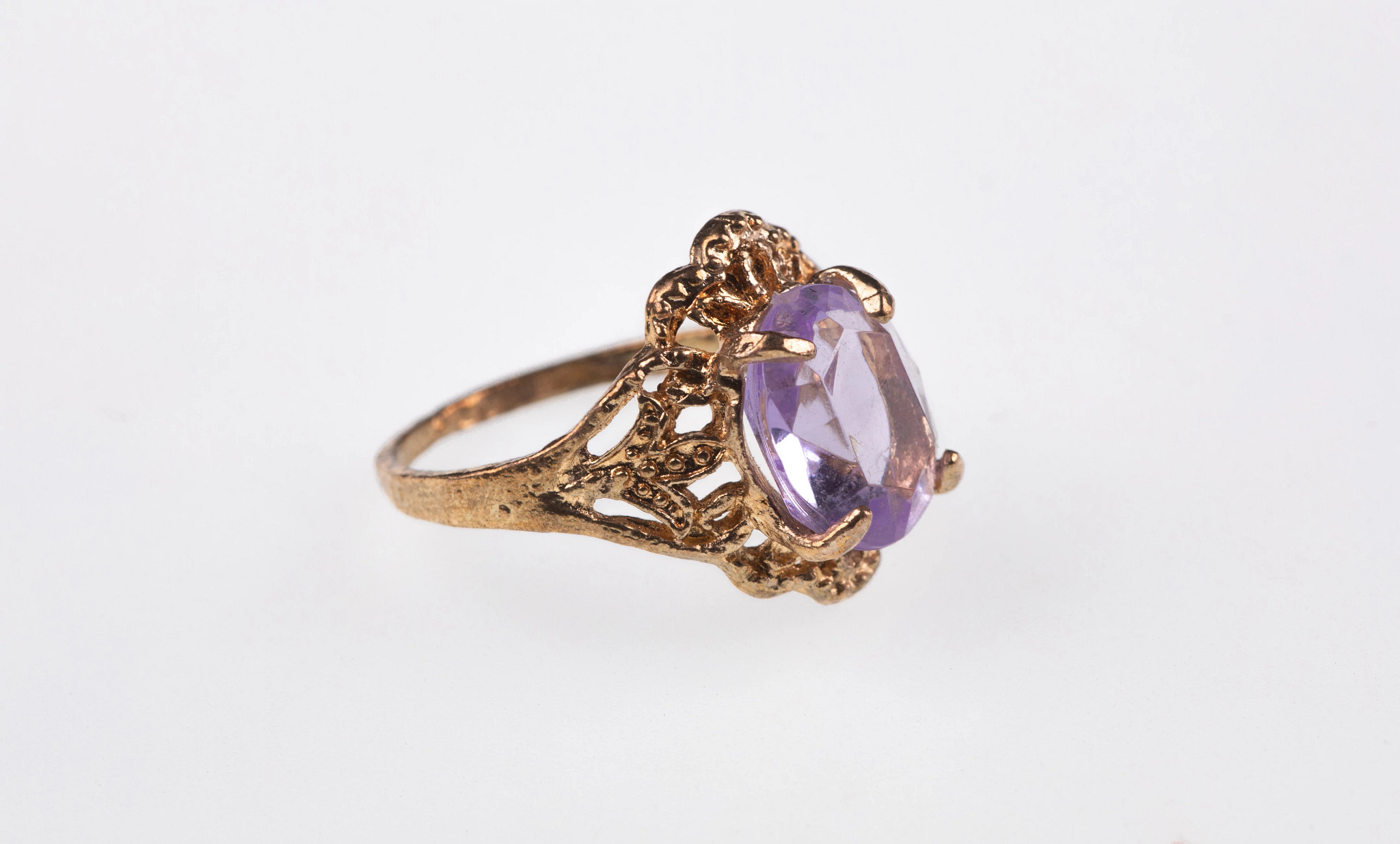
The Grand Period saw a shift toward more dramatic, architectural designs inspired by global exploration and a fascination with the past. Jewelry from this era became larger and more structured, often showcasing bold shapes and heavier materials. Deeply colored gemstones, such as amethyst and spinel, along with enamel accents and high-contrast designs, were especially popular in Victorian-era jewelry. Advancements in metalworking enabled jewelers to experiment with scale and intricate surface detailing. These types of pieces are among the most recognizable examples of Victorian jewelry today.
The aesthetic period
The Aesthetic Period introduced a lighter, more artistic approach to Victorian-age jewelry, inspired by Japanese design, medieval patterns and the Arts and Crafts movement. Jewelry became more fluid and expressive, drawing on asymmetry, delicate lines, and nature-inspired themes. Diamonds and pastel gemstones gained popularity, often set in silver or white metal for a softer look. Victorian-era jewelry from this period feels more refined and wearable, serving as a bridge between bold Victorian designs and emerging early 20th-century styles.
Mourning jewelry is often associated with Queen Victoria and the Victorian era, as she adopted dark clothing and mourning jewelry after Prince Albert's death in 1861. However, this style represents only a small subset of Victorian jewelry and does not reflect the wide range of designs created throughout the era.
Materials and innovation in victorian jewelry
Victorian jewelry was shaped by rapid innovation in materials and manufacturing. The Industrial Revolution made gold more accessible, leading to the widespread use of rolled gold, gold-filled components, stamped patterns, and fine pieces. Discoveries of new gemstone sources introduced precious and semi-precious gemstones to a broader audience, while advances in cutting techniques enhanced brilliance and wearability. Jewelers also experimented with mixed metals, combining yellow gold with silver or other white metal alloys to highlight gemstones and create contrast. These developments allowed Victorian-era jewelry to increase in craftsmanship while making it more accessible to the masses, a combination that helped define Victorian-era jewelry and expand its influence to this day.
How victorian jewelry impacted modern trends
Many jewelry styles we consider timeless today can be traced directly back to Victorian period jewelry. Stackable rings, for example, evolved from Victorian-era bands worn together to mark milestones or convey personal meaning. Lockets are still a staple in modern jewelry collections, often reimagined with sleeker designs. Even today's popular chain styles, such as long guard chains and collar-length necklaces, originated during the Victorian age, when women layered chains with pendants or styled long chains into multiple layers around the neckline.
Design techniques from the Victorian era also still influence modern fine jewelry in subtle ways. Intricate metalwork like hand engraving, repoussé and milgrain edging are all techniques perfected during this period. Rose-cut and old mine-cut diamonds, once common in Victorian-era jewelry, have regained popularity, admired for their soft sparkle and antique aesthetic. You’ll also notice influences of Victorian gothic jewelry in modern blackened metals, symbolic designs and high-contrast gemstone settings—proof that the Victorian era’s bold creativity still resonates through the jewelry world today.
Protect your valuable jewelry with Jewelers Mutual
Whether you own valuable Victorian-era jewelry or modern pieces inspired by Victorian style jewelry, consider protecting them with a personal jewelry insurance policy from Jewelers Mutual. Coverage includes loss, theft, damage and disappearance. Click the button below to check your rate today and protect your Victorian jewelry with confidence.