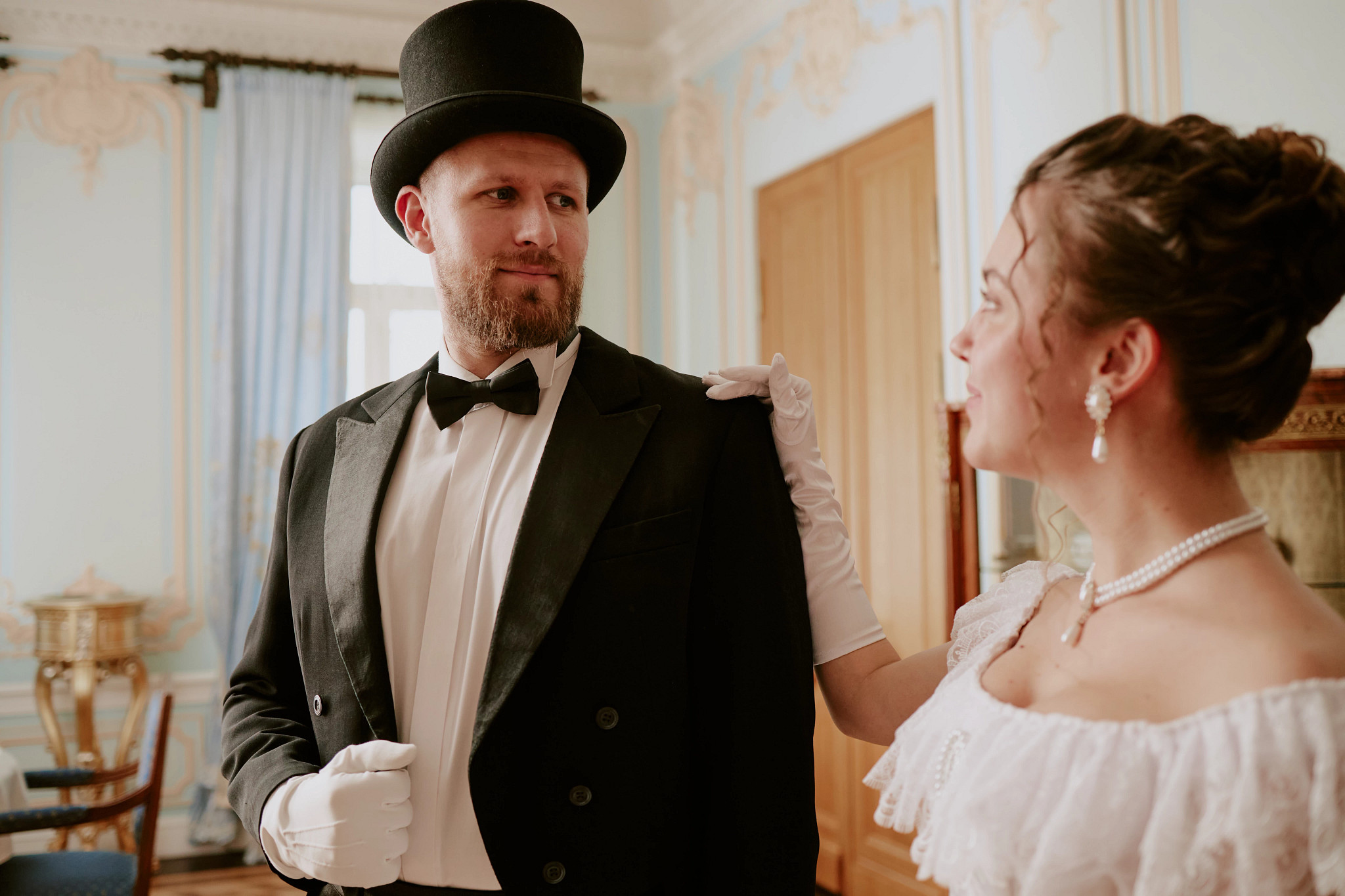
p>The Georgian era was a time when everything, from the grandest house to the tiniest trinket, was incredibly detailed and decorative. Unlike jewelry made today, antique Georgian jewelry was crafted entirely by hand, meaning no two pieces were ever the same. Jewelers of the time took inspiration from nature and the world around them, turning gold and silver into art. It was a period of high style and intricate artisanship that still influences jewelry design today. Let’s take a deep dive into the ornate era of Georgian jewelry!
What is the Georgian era?
The Georgian Era was a roughly 120-year span from 1714 to 1837, named after the four successive British Kings named George. This long stretch of time saw the world transition from a rural society to one centered on the Industrial Revolution, which played a significant role in the evolution and history of jewelry. Because the era lasted well over a century, the designs shifted more than in other shorter eras. For example, heavy, symmetrical styles shifted to more romantic and nature-inspired looks from one era to the next. Global exploration also inspired new materials and ideas, enabling jewelry to reflect people’s status and worldliness.
Common Georgian jewelry features
While Georgian styles changed over the 120-year span, several core characteristics remained constant across the era. From the way the metal was shaped to the specific types of stones available at the time, the following features are what make antique Georgian jewelry so identifiable.
Metalwork
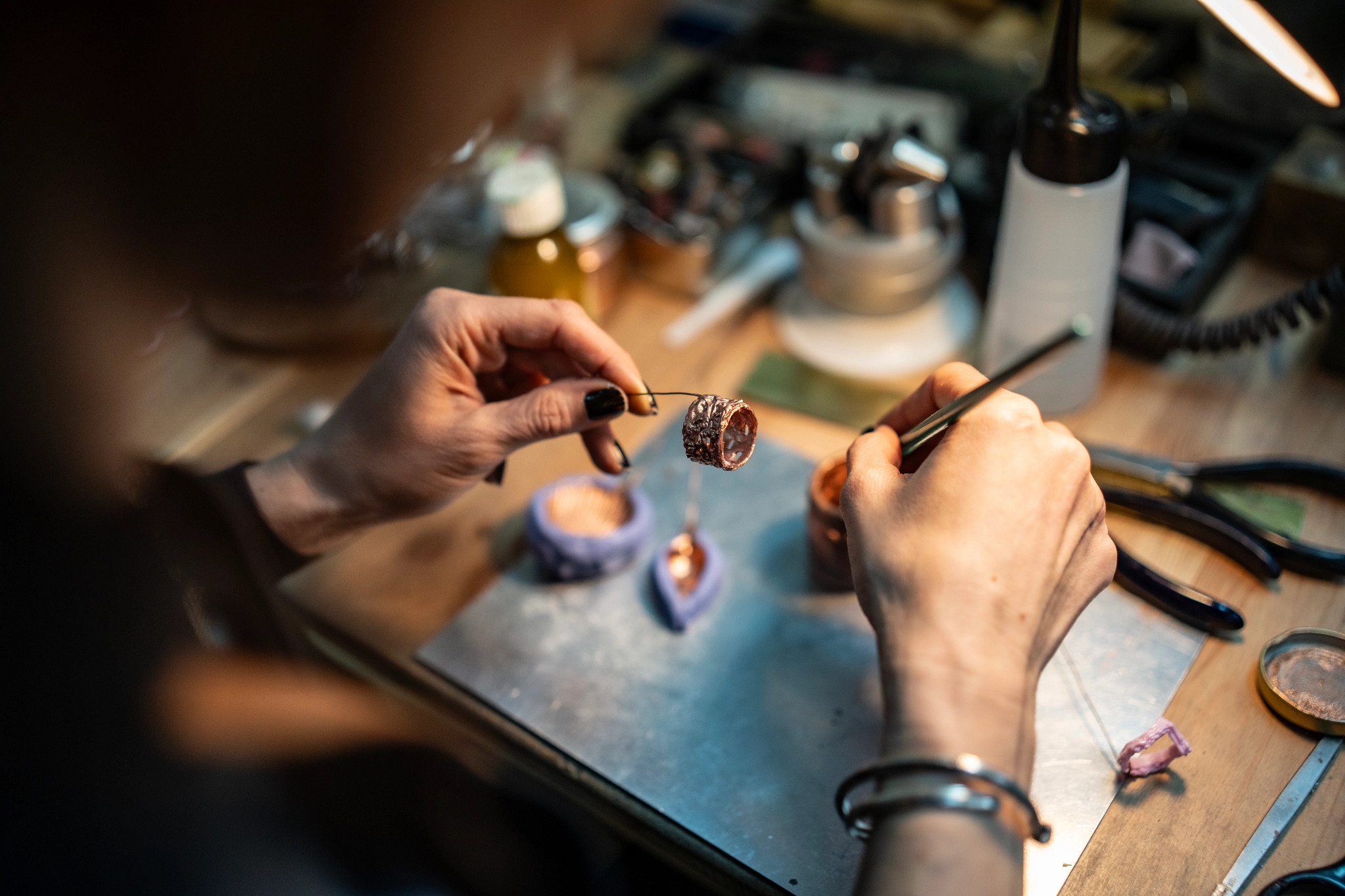
Since Georgian-era jewelers didn't have the modern tools we have today, they were forced to find creative ways to create gold and silver designs by hand. These designs often included repoussé, a technique where the metal is hammered from the back to create a raised, 3D design on the front.
Their designs also featured cannetille, which resembles intricate embroidery or lace made from very thin gold wires (similar to filigree). Because gold was expensive and hard to find, jewelry makers often beat it thin or used delicate wire designs to make pieces look large and impressive without using too much metal. The result was jewelry that looked expensive but was actually relatively lightweight and comfortable to wear.
Materials
Silver and 18k gold were the primary metals used in Georgian-period jewelry, but they were often combined in a very specific way. Because white gold and platinum weren't used yet, jewelers set diamonds in silver to make them look brighter and more brilliant. However, silver can tarnish and leave dark marks on skin or clothing, so jewelers would back these silver pieces with a thin layer of 18k gold. This hybrid method kept the jewelry looking bright without staining the wearer's skin or wardrobe. You might also find pinchbeck, a mix of copper and zinc that looked like gold but was much more affordable, an early example of what would be considered costume jewelry today. Aside from metals, materials like enamel (and even human hair!) were frequently used to create mourning jewelry or sentimental keepsakes.
Gemstones
The Georgian-era jewelry we see today features a mix of precious stones and "paste," a high-quality lead glass that looked very similar to precious gemstones. Diamonds, always the ultimate status symbol, were hard to come by, so jewelers turned to colorful gemstones like garnets, topaz and emeralds. You will often see these gemstones in Georgian settings, where the back of the stone is completely enclosed by metal. To add extra life to gems in these types of settings, lapidarists would often place a tiny piece of colored or silver foil behind the stone to enhance its sparkle. Remember, they were not viewing gemstones under bright, flickering fluorescents in the 1700s; it was all candlelight after dark!
Gem cuts
Since Georgian-era stones were cut by hand (not the way diamonds are cut today, with lasers), they don't have that "perfect" modern diamond look. The most popular styles were rose cuts, which are flat on the bottom and faceted on top like a rosebud, and table cuts, which look like a simple flat square. Old Mine cuts, the chunky, squarish shapes that came before the round brilliant cuts we see today, were also popular during the Georgian era. These cuts were designed specifically to capture the warm, flickering light of candles rather than the electric lights of the modern world. Because of this, Georgian-style rings often have a soft, romantic glow that feels much deeper than sparkling modern rings.
Themes and symbolism of Georgian era jewelry
Jewelry in the Georgian era was worn partly for show and partly to communicate via themes and symbols. The Georgian period also included acrostic jewelry, in which the first letter of each gemstone spelled a secret message. For example, a piece of jewelry with a line of gemstones including a ruby, emerald, garnet, amethyst, ruby and diamond would spell "REGARD," a term widely used as a discreet way to show affection for someone.
Nature had a strong influence on Georgian-era jewelry, and even a simple flower or a crescent moon held a specific meaning, often representing hidden love or a desire for protection.
Lastly, another “secret message” jewelry type from the Georgian era included lover's-eye jewelry, in which a miniature, hand-painted portrait of one eye (that of the wearer's sweetheart) appeared in items such as Georgian-style rings, pendants, and brooches. This allowed the wearer to keep their loved one close while keeping their identity a secret.
Popular Georgian period jewelry styles
While the era lasted over a century, a few iconic styles still stand out as the must-haves of the period. The rivière necklace is a classic example, featuring a seamless string of gemstones that graduate in size from the center. These stones were often collet-set, meaning each gem was cradled in an individual metal “cup” rather than held by modern prongs. For those who like a bit of earring drama, girandole earrings were the Georgian period’s go-to choice, featuring a chandelier-like design with three dangling pear-shaped drops. While exploring Georgian period jewelry styles, you are likely to come across en tremblant (French for "to tremble") pieces, which were brooches or hairpins attached to tiny springs that made them "tremble" and sparkle with movement.
These styles highlight the era's shift from heavy, blocky designs to pieces that felt more alive and moved beautifully. Because this era is of interest to many, some choose to have a more modern, Georgian-inspired piece created today. However, custom jewelry costs can vary depending on the complexity of these antique-inspired details.
Protect your valuable jewelry with Jewelers Mutual
A personal jewelry insurance policy from Jewelers Mutual provides comprehensive coverage that standard homeowners insurance often misses, including protection against loss, disappearance, damage and natural disasters. Click the link below to check your rate today.