Lacquer is a natural, resin-based finish derived from tree sap, such as that of the urushi tree native to East Asia. It has been a part of the jewelry world for centuries, turning ordinary pieces into vibrant works of art. Jewelry lacquer is applied in thin layers to create a waterproof, heat-resistant finish on materials such as fine metals and organic woods. Unlike simple paints, jewelry lacquer undergoes a complex hardening process in high humidity, resulting in a glass-like luster that provides unique aesthetics and increased durability. Keep reading to learn all about lacquer jewelry, what it is and how you can get some pieces for your jewelry box.
History of lacquer jewelry
The practice of using lacquer for metal jewelry and other decorative pieces dates back over 7,000 years. Jewelry lacquer originated in China and reached its peak in popularity in Japan. Originally used to waterproof and strengthen weapons or drinking cups, lacquer eventually became a luxury material for personal decoration.
In the history of jewelry, lacquer represents one of the earliest forms of "smart" material use, in which jewelry makers manipulated organic sap into a resilient, glass-like covering. The Heian period, between 794 and 1185, saw innovation in lacquer, including its mixing with powdered incense to create beautiful and fragrant objects. Over the centuries, lacquer has evolved from a purely protective coating for jewelry into a high-art form. This technique survived through the Industrial Revolution, even as many shifted to mass-produced jewelry and synthetic materials, and is a staple of luxury craftsmanship today.
Popular lacquer techniques in jewelry
Lacquer artists use various techniques to achieve beautiful effects on jewelry, each offering a unique look and level of detail. The following methods highlight the versatility of lacquer as a decorative and protective material, allowing for a diverse range of artistic designs.
The maki-e
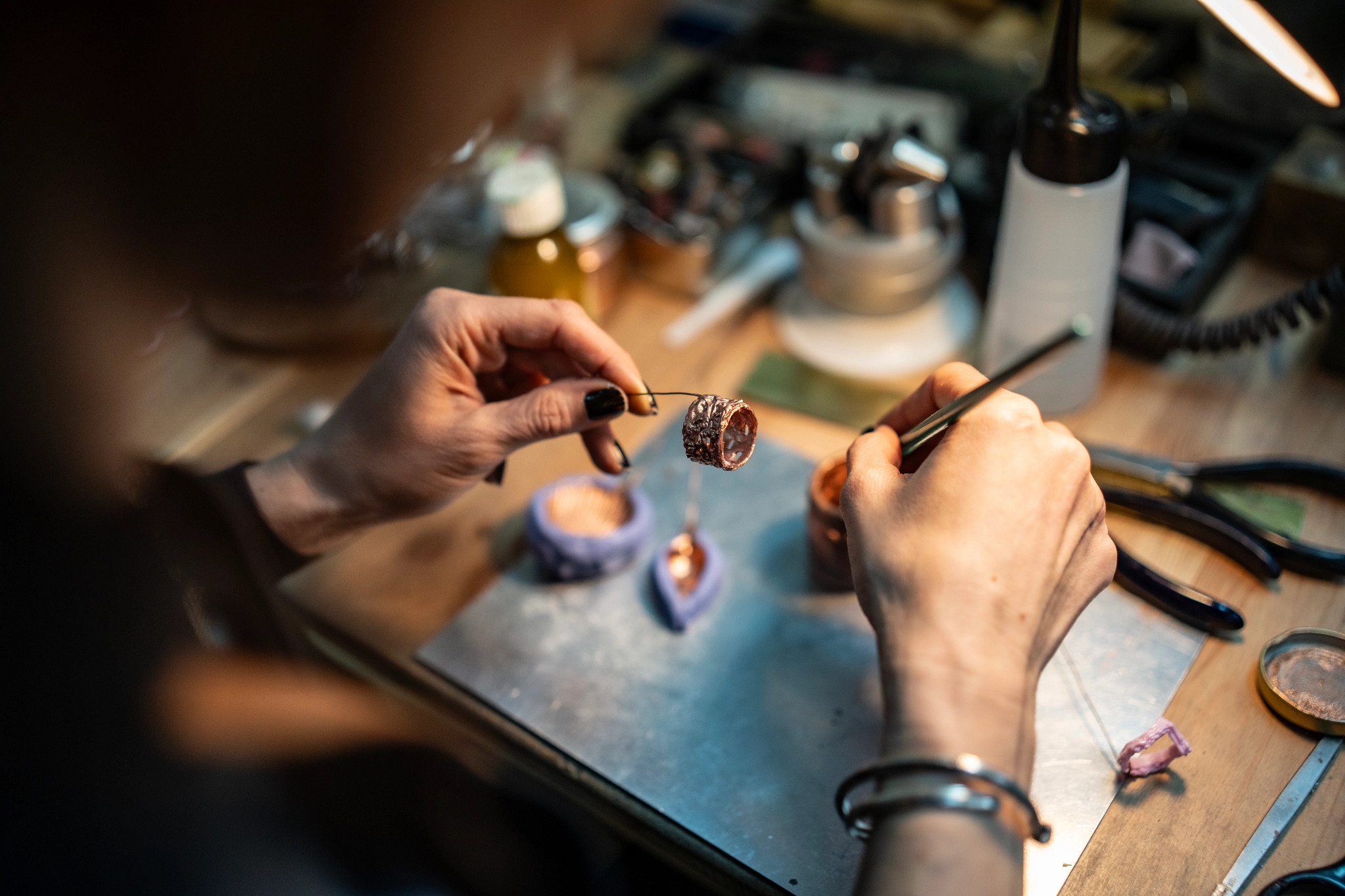
Maki-e, a Japanese lacquer jewelry technique, involves sprinkling metal powders, such as gold, silver or copper, onto a wet lacquer surface. The powders are applied with a bamboo tube or a fine brush, creating intricate patterns, which are then sealed with additional layers of lacquer and polished. This method results in shimmering surfaces often found on statement pieces, such as pendants, wide cuff bracelets, or decorative brooches depicting nature scenes and geometric designs.
Urushi lacquer
Urushi lacquer is the traditional Japanese lacquer made from the sap of the urushi tree. Known for its great durability, sheen, and resistance to acids and abrasion, Urushi lacquer is applied in multiple thin layers (sometimes dozens!) with careful drying and polishing between each layer. The natural pigments added to the lacquer create deep, rich colors, most famously black and red, providing a luxurious finish to jewelry.
Champlevé technique
While not exclusively a lacquer technique, champlevé is often used with lacquer or enamel to create beautiful jewelry pieces. In this method, hollows or cells are carved or etched into a metal surface and then filled with colored lacquer or enamel. The raised metal lines outline the colored areas, creating bold, vibrant designs with clear, defined edges. The contrast between the metal and the colorful lacquer gives champlevé jewelry a beautiful architectural look.
What is the difference between lacquer and resin?
To the untrained eye, lacquer and resin can look similar, but they are quite different in terms of chemistry and integrity. Resin is a synthetic polymer (basically a high-grade plastic) that cures quickly when mixed with a catalyst (such as a chemical hardener) or exposed to ultraviolet (UV) light. Resin is great for costume jewelry because it is cost-effective and versatile.
Lacquer, however, is an organic material that requires a much slower, more deliberate jewelry application process. While resin can yellow or become brittle over decades, true lacquer is known for its longevity. It actually becomes harder and more beautiful as it ages! Lacquer is generally better suited for high-end statement pieces or items that will see frequent skin contact, as it is hypoallergenic and feels warmer to the touch than what many call the “plastic feel” of resin.
How lacquer is used in modern jewelry
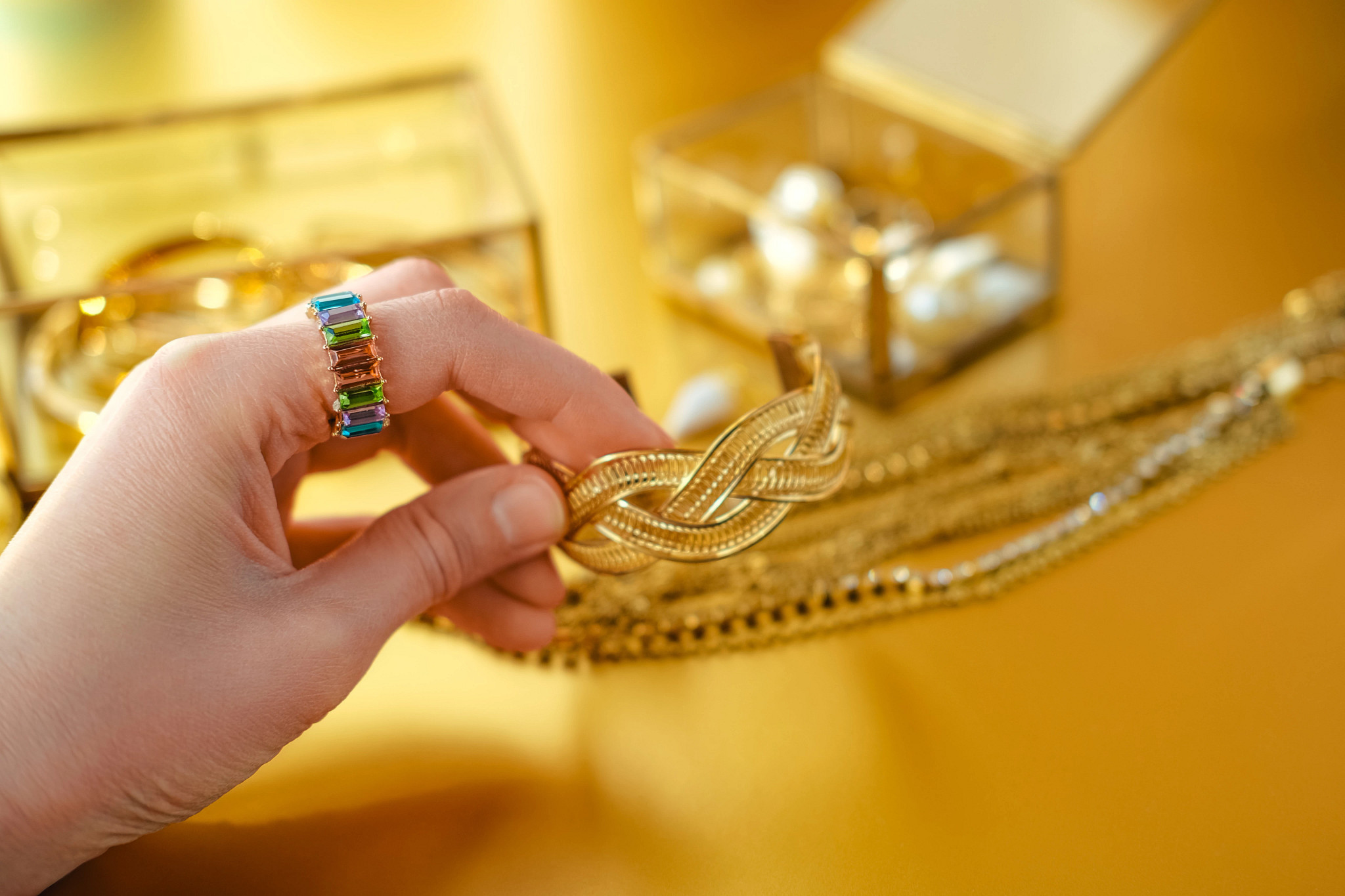
Lacquer is still used in modern jewelry; however, its usage has evolved to blend traditional and contemporary looks. Today, designers often use lacquer to add bright pops of color to minimalist metal designs, create intricate patterns or provide a contrast to precious stones and pearls. Unlike historical uses, in which lacquer often covered entire pieces, modern applications might highlight specific elements or sections of a design.
While lacquer has remained a staple in certain traditional jewelry styles, the perception of lacquer jewelry has broadened. Once exclusively associated with old artifacts, lacquer is now widely embraced for its versatility and durability across many styles, from high fashion to everyday wear. Lacquer can be applied in both opaque and translucent finishes, making it a perfect material for those seeking innovative, contemporary designs.
How to care for lacquer jewelry
Caring for your jewelry, including proper cleaning and storage, is important for maintaining the look and longevity of your lacquer jewelry. To clean your lacquer jewelry, gently wipe it with a soft, damp cloth. Avoid abrasive cleaners, harsh chemicals or ultrasonic cleaners, as these can damage the delicate lacquer finish. When handling, try to minimize direct contact with oils and lotions, which can dull the surface over time.
Lacquer is generally quite durable, but it can scratch or chip if subjected to sharp impacts or rough handling. Store your lacquer jewelry separately in a soft pouch or a fabric-lined box to prevent scratches from other items. While lacquer is quite resistant to temperature fluctuations, avoid extreme heat or prolonged direct sunlight, as these conditions can cause it to crack or fade.
Protect your valuable jewelry with Jewelers Mutual
Protect your valuable jewelry with a personal jewelry insurance policy from Jewelers Mutual. A policy protects against loss, damage, disappearance and more. While many people use homeowners insurance to protect their jewelry, a personal jewelry policy from Jewelers Mutual may offer coverage beyond what a typical homeowners policy provides. Click the button below to check your rate today!