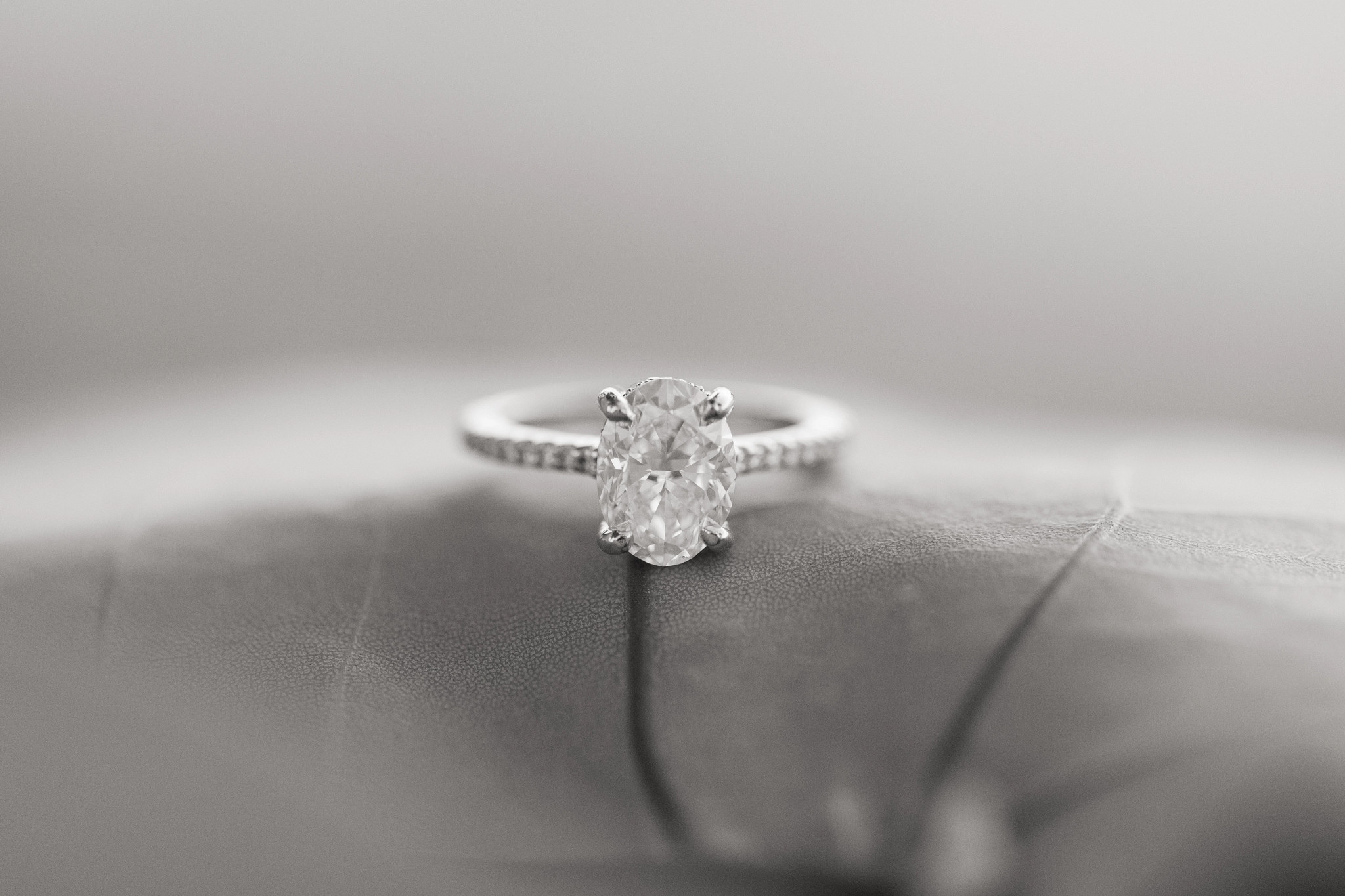
Few pieces of jewelry are as iconic as the engagement ring. From the moment someone gets down on one knee, opens a small box and pops the question, that ring becomes the centerpiece of a love story – a symbol of commitment meant to be cherished for a lifetime. While its meaning has remained constant, engagement ring design has evolved with each era, reflecting the artistry, innovation and tastes of the times. Let’s take a journey through the history of engagement rings to explore the styles that have captured hearts through the years.
The ancient origins: more than just a ring
When did engagement rings start? Like many traditions in the broader history of jewelry, the story begins in ancient civilizations. In Egypt, couples exchanged braided bands of hemp, leather, reeds or bone to symbolize an unending bond. This practice laid the groundwork for wedding ring traditions. In Rome, rings of gold, iron, or copper marked a formal agreement, rather than simply a romantic one. Some later Roman designs featured engraved motifs or clasped hands, early versions of fede rings representing partnership and trust. Both civilizations wore the ring on the left hand's ring finger where they claimed that the vena amoris (Latin for "vein of love") ran in a direction straight from that finger to the heart.
The georgian era: handcrafted detail and candlelit sparkle (1714-1837)
By the Georgian era, engagement rings began to resemble the antique styles admired today. It was a time of candlelit elegance, and rings were meticulously handcrafted to reflect that dimly lit atmosphere. Gemstones, including diamonds, sapphires, garnets, rubies, and emeralds, were typically set in gold and topped with silver. Many stones were cut flat, like rose cuts or early old mine cuts, and their backs were often enclosed in metal or lined with foil to reflect candlelight, creating a soft, luminous glow.
The victorian era: sentimental symbolism and the rise of diamonds (1837-1901)
During Queen Victoria’s reign, engagement rings grew more personal and symbolic, influenced by her love story with Prince Albert. Her engagement ring, a serpent-shaped gold band with an emerald head and ruby eyes, symbolized eternal love and sparked a fascination with meaningful motifs. Flowers, hearts and bows became hallmarks of the era. Rings were often crafted in yellow or rose gold and sometimes featured hidden engravings for an intimate touch. Early Victorian designs combined colorful gemstones with old-mine cut diamonds, sometimes accented with seed pearls for softness. After the 1867 discovery of diamonds in South Africa, diamonds became more abundant, and cluster rings, which showcased a diamond in the center surrounded by smaller stones, became fashionable.
The gilded age & edwardian elegance (pre-1920s)
In the Gilded Age, engagement rings emphasized visual prestige. Center stones became larger and were often set high, while settings grew elaborate and dimensional, designed to maximize light, presence and visible wealth. By the Edwardian era, that grandeur softened into delicate refinement. Platinum emerged as the defining metal, allowing intricate lace-like filigree and fine milgrain detailing. Diamonds set in platinum created the signature white-on-white effect, giving engagement rings a lighter, airier elegance compared to the bold designs of the Gilded Age.
The roaring twenties & art deco designs (1920s-1930s)
The Roaring Twenties arrived with secret speakeasies, flowing champagne, flapper dresses and late-night jazz. Engagement rings mirrored that rebellious spirit through bold geometry and sharp symmetry, characteristics of Art Deco design. Color also made a striking statement. Sapphires, emeralds and onyx were often paired with diamonds in high-contrast arrangements, moving away from the all-white elegance of the Edwardian era. Popular cuts included emerald, Asscher, baguette and marquise styles, often set into intricate designs finished with filigree and milgrain that highlighted the era’s exceptional craftsmanship.
War, hollywood glamour and the solitaire
By the early 1940s, the world was at war. Platinum was reserved for military use, so engagement rings were crafted in yellow or rose gold, often featuring sapphires, rubies, emeralds or aquamarines. The period, later known as the Retro era, embraced bold, sculptural designs. Rings had thicker bands, elevated settings and illusion mountings that lifted the stone above the finger, allowing even modest gems to appear larger and more brilliant. These dramatic silhouettes echoed the glamour of Hollywood, designed to catch the light and command attention. In 1947, a pivotal moment reshaped the history of engagement rings when the British-owned diamond company De Beers launched its iconic “A Diamond Is Forever” campaign. The catchy slogan linked diamonds with enduring love and helped cement the diamond as the ultimate symbol of commitment, paving the way for the postwar rise of the solitaire engagement ring.
By the 1950’s, platinum returned to prominence, and the classic solitaire, a single round brilliant-cut diamond, often flanked by tapered baguette side stones, became the most coveted design. Hollywood further fueled the fascination, with Marilyn Monroe famously declaring diamonds are a “girl’s best friend” in Gentlemen Prefer Blondes (1953).
Bold and experimental: the swinging sixties and seventies
The 1960s ushered in a cultural revolution rooted in self-expression and social change. Engagement rings reflected that free-spirited mindset. Breaking away from the polished restraint of the 1950s, angular lines and geometric forms reemerged. Round brilliant cuts gave way to more dramatic, elongated cuts. Step cuts, such as the emerald and Asscher cuts, were prized for their “hall of mirrors” effect, while pear and marquise cuts introduced pointed, sculptural silhouettes. Diamonds remained central, but non-diamond engagement rings flaunting beautiful gemstones surged in popularity, thanks in part to Jacqueline Kennedy’s emerald-and-diamond engagement ring.
By the 1970s, yellow gold settings and oversized, high-profile designs celebrated individuality. Multi-stone clusters, nature-inspired motifs and channel-set bands gained momentum, as did princess cuts. Coordinated engagement and wedding band sets became increasingly popular. Earthy gems, such as tiger’s eye, turquoise and malachite, reflected the decade’s bohemian spirit.
The era of excess: the opulent 1980s
The 1980s were loud, audacious and unapologetic, defined by massive shoulder pads, oversized hoop earrings and bright neon everything. Fashion was a power move, and engagement rings followed suit with a “more is more” aesthetic. Thick gold bands provided a bold base, while cathedral and high-set prong settings raised center stones. Multi-stone designs, including clusters, three-stone arrangements and halos, amplified sparkle. Popular cuts included princess, pear and marquise, often paired with vibrant sapphires or rubies. Some rings combined yellow gold with white gold or platinum for added contrast. Princess Diana’s 1981 blue sapphire halo engagement ring became a cultural touchstone, sparking renewed interest in colored center stones.
Sleek and simple: the minimalist 1990s
After the flashy extravagance of the 1980s, engagement ring design in the 1990s redefined modern romance through understated elegance. Suddenly, less felt like more. Bold gold faded in favor of sleek platinum and white gold bands. The classic solitaire defined the decade, typically set in thin, minimalist settings that let the stone take center stage. Princess, round and marquise cuts were especially popular. Some designs incorporated tapered or straight baguettes, while subtle halos began to appear toward the end of the decade. Three-stone engagement rings experienced a revival, symbolizing a couple’s past, present and future.
The new millennium: halos and pave (2000s-2010s)
At the turn of the millennium, engagement rings supersized the sparkle. Halo settings encircled the center diamond with a ring of smaller stones to enhance both size and brilliance, while double and triple halos heightened the effect. Pavé bands, lined with continuous diamonds along the shank, created shimmer from every angle. White gold and platinum dominated, while cushion, radiant and princess cuts were especially favored.
Today’s trends: personalization and unique shapes (2020s)
If earlier decades were defined by signature styles, the 2020s are defined by doing things on your own terms. Rather than feeling confined by tradition, couples are embracing the freedom to choose what resonates with them, selecting engagement rings that reflect their individual style and unique love story. Discreet engravings, birthstones and colored gemstones allow for personal symbolism, while diamond alternatives and lab-grown stones broaden the range of possibilities. Custom and bespoke designs, including Toi et moi (“you and me”) rings that pair meaningful stones (sometimes matching birthstones), further underscore the shift towards individuality.
The era feels open-ended. Instead of defaulting to convention, many gravitate towards unexpected shapes and proportions. Elongated cuts such as oval, emerald, radiant and pear offer a silhouette distinct from the classic round, while east-west settings add an unexpected twist.
Choosing an engagement ring that’s both trendy and timeless
If an engagement ring is meant to last a lifetime, it should feel as meaningful decades from now as it does the day it’s slipped on the finger. To do this, it must strike a balance between timeless design and modern expression.
It begins with choosing a classic foundation. A solitaire, refined pavé band or prong setting offers an enduring silhouette that keeps the focus on the center stone. Quality is equally important. A well-cut gem, skilled craftsmanship and durable metals such as platinum and gold ensure the ring can be worn every day and still look beautiful years from now.
From there, look for subtle contemporary details. A halo adds dimension, mixed metals introduce contrast and an elongated shape offers a fresh look while remaining grounded in tradition. Vintage-inspired touches, such as milgrain edges, filigree, or hidden engravings, can add character and depth, blending the nostalgia of a bygone era with a design that still feels current.
Protect your engagement ring with Jewelers Mutual
An engagement ring is one of the most important and valuable pieces of jewelry you can give or receive. Protect all that it represents with a personal jewelry insurance policy from Jewelers Mutual. Designed specifically for jewelry, this affordable coverage helps protect against loss, theft, damage and disappearance. Unlike homeowners insurance, it offers repair or replacement without impacting your homeowners premium. Click the button below to check your rate.